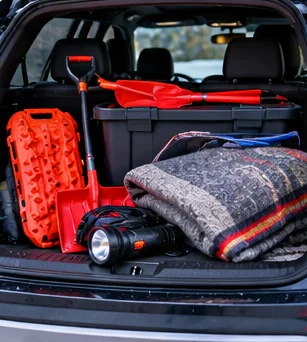
Products and configurations to compare
Compact emergency snow shovel
Fits behind seat or trunk bin.
Best when: wheels/exhaust need clearing
Watch for: small blade is slow for driveway use
Winter roadside emergency kit
Good foundation, then customize.
Best when: you need one organized package
Watch for: bundled components vary in quality
Traction mat / recovery board pair
Reusable grip aid.
Best when: tires spin on packed snow
Watch for: not a substitute for proper tires/chains where required
Keep the exhaust clear if stranded
Snow around the tailpipe can create dangerous exhaust buildup.
Warmth is a survival item
Blanket, hat, gloves and dry socks deserve priority.
Phone power matters
A dead phone can turn a minor delay into isolation.
Water needs freeze awareness
Bottles can freeze and burst in severe climates; rotate supplies.
Tailor chains to the vehicle
Use only chain/cable systems approved for tire and vehicle clearance.
Winter vehicle gear should solve immobilization, visibility and warmth
The priorities are simple: clear the glass, regain traction, stay warm, communicate and survive a delay. Ready.gov winter-storm guidance includes a phone charger, first aid, jumper cables, flares or signaling, snow and ice removal tools, sand or cat litter, flashlight, tow rope, shovel, chains or snow tires, warm clothing, blankets, gloves, boots, water and non-perishable food.
Build the kit around your region. Tire chains can be essential in mountain jurisdictions and unnecessary in a plowed urban commute. A compact shovel is useful almost everywhere snow accumulates. A windshield cover saves morning scraping but is not an emergency tool once the car is stuck.
Pack for access, not storage efficiency
The flashlight and gloves should not be buried under luggage. Put the first-response items in a top-access bin or backpack that can be reached from the cabin if the trunk freezes shut or is inaccessible.
Before checkout
- Tool matches typical snow depth and whether snow is wet or powdery
- Driveway/sidewalk surface is compatible with scraper or blade material
- Battery platform and cold-weather charging/storage are understood
- Replacement wear parts or shear pins are available
- Roof tools can be used safely from the ground
- Deicer chemistry is compatible with pavement, pets and landscaping
- Traction cleats fit the exact footwear securely
- Heated gear fits without reducing circulation
- Vehicle kit remains accessible under luggage
- Storage plan allows wet equipment to dry before covering
Buy before the forecast, not during it
Snow equipment is unusual because regional demand spikes at exactly the same moment. The week a major storm appears in the forecast is when shovel racks empty, ice melt gets rationed, replacement shear pins disappear and the most popular blower models sell out. Preseason buying is not only convenient; it lets you choose the right product instead of whatever remains on the shelf.
Use a short inventory at the start of autumn: primary clearing tool, manual backup, ice control, personal traction, vehicle visibility/emergency gear and one storage location. Replace worn scraper edges and dead batteries before they become storm-day failures.
Test the system once before snow
Start the blower or install its charged batteries, unfold the roof rake, fit the cleats over the boots you will actually wear, test the spreader gate and open the car emergency bin. Practice tire chains if your travel requires them. The first time to discover a missing pin, dead charger or wrong cleat size is not at 5 a.m. in a storm.
After each event, dry gear before storage and restock consumables. Winter readiness is less about owning the most equipment than making sure the small set you rely on is ready every time.
Frequently asked questions
What is the single most useful item?
A charged phone and safe winter tires are foundational, but the kit is about redundancy.
Cat litter or traction boards?
Loose abrasive can help minor spinning; boards are reusable and more structured.
Should I keep food?
Ready.gov guidance includes non-perishable snacks.
What about a blanket?
Yes, warmth is core winter emergency preparation.
Current product/source checks
Affiliate disclosure: SnowSupplies.co may earn from qualifying purchases through Amazon Associates and eBay Partner Network at no extra cost to you. Amazon links use scouttheory-20; eBay links use campaign 5339137014.