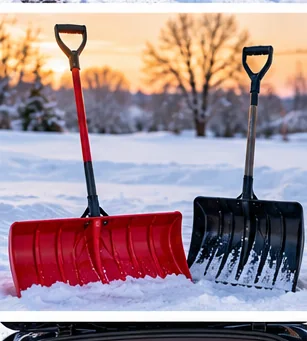
Plastic blades are the gentlest on decks, pavers and stamped concrete and usually the lightest. Aluminum blades are stronger and tolerate scraping better, at the cost of denting and some surface risk. Steel blades take the most abuse but weigh more and need care against rust. Choose the blade by your surface and snow type, then check the edge and handle.
Start with the surface
Think about what the blade will touch. A bare wooden deck, composite boards, pavers and stamped concrete are easy to scratch, and a metal edge can gouge or catch on them. Smooth poured concrete and asphalt tolerate more, but an aggressive edge can still chip a rough or cracked surface. Gravel is a special case: any scraping edge can pick stones up and throw them.
If you clear several surfaces, you may want two tools. Our pusher versus shovel post explains when a wide pusher is the better first tool.
Plastic and polycarbonate blades
Plastic blades are generally the lightest option and the quietest on a surface. They are the usual choice for decks, steps and anything you do not want to scratch. Because they are lighter, they are easier on the back across a long session; see the site's shoveling exertion page on pacing.
The trade-offs are edge wear and strength. The edge of a plain plastic blade can wear down on rough concrete, and a plastic blade can crack if it is used to pry or chip ice or is hit in very cold weather. Look for a blade with a replaceable wear strip at the leading edge, and read the maker's guidance on cold-weather use.
Aluminum blades
Aluminum is a middle option. It is stronger than plastic and lighter than steel, and it holds a firm edge for scraping packed snow off a hard surface. Many aluminum shovels have an edge strip that can be replaced.
The downsides are bending and denting if you pry with it, and the metal edge can mar soft surfaces. Wet snow can stick to bare metal, so smoother or coated blades shed better; check the maker's notes about the blade finish.
Steel blades
Steel is the toughest and stands up to chipping thin ice and heavy use. It is also the heaviest of the three, and the weight adds up over a long clearing session. Steel can rust if a coating wears through, so dry it before storing it. A steel edge is the most likely to scratch decks and pavers and to catch on rough joints.
Steel makes sense for a hardscape driveway and a person who is comfortable with the weight. For ice, keep in mind that mechanical chipping works best on loose layers; bonded ice may call for a chipper or ice melt. The spreader guide helps with the melt side.
Blade materials side by side
| Material | Strengths | Trade-offs | Fits best |
|---|---|---|---|
| Plastic | Light, quiet, gentle on surfaces | Edge wear; can crack when pried or struck in cold | Decks, pavers, light snow |
| Aluminum | Stronger edge, mid weight | Can dent or bend; metal edge can mar soft surfaces | Concrete, asphalt, packed snow |
| Steel | Toughest edge | Heavy; rust if coating wears; most likely to scratch | Rough hardscape, light ice scraping |
These are qualitative comparisons, not test results; weights and strengths vary by maker. Check each listing for the shovel's weight, blade width and construction.
Care that extends blade life
Whatever the material, a few habits help. Knock snow off the blade outdoors before storing it, let the shovel dry rather than leaning it wet against a wall, and keep metal blades away from salt puddles. Check a plastic blade for stress cracks at the start of each season, and replace a worn wear strip before it exposes the blade edge. A shovel stored out of the sun is less likely to turn brittle.
Edge, handle and snow type
Snow type changes the material choice. Light powder moves with any blade. Wet, heavy snow strains the handle and sticks to rougher blades. A smooth, slick surface sheds it better, and a smaller blade moves less weight per scoop.
- Replaceable wear strip on the leading edge
- Handle length and grip that suit your height
- Blade width that you can lift when full
- A finish that sheds wet snow
- Manufacturer note on cold-weather use and warranty
If you are shopping for someone else, gifts for people who shovel snow covers what to give instead of guessing at the shovel. For car-trunk shovels, see the vehicle snow shovel guide.
Where to shop
These are search links for categories. Check the blade material, weight and wear strip in each listing.
Plastic blade snow shovel with wear strip
Lighter and easier on surfaces.
Best when: you clear decks, pavers or light snow
Watch for: check for a replaceable wear strip and cold rating
Aluminum blade snow shovel
A stronger edge for hard surfaces.
Best when: you clear concrete or asphalt and packed snow
Watch for: avoid prying; check the edge strip
Steel blade snow shovel
Toughest edge; heaviest.
Best when: you scrape hard surfaces and can handle the weight
Watch for: dry after use; avoid soft surfaces
Frequently asked questions
Which snow shovel blade material is best?
It depends on the surface. Plastic suits decks and pavers, aluminum suits concrete and asphalt, and steel suits rough hardscape and scraping.
Will a metal shovel damage my driveway?
It can scratch soft surfaces such as decks and pavers and chip a rough or cracked slab. Smooth concrete and asphalt tolerate it better.
Do plastic shovels crack in the cold?
They can if used to pry or struck hard in cold weather. Look for a wear strip and the maker's cold-weather guidance.
Is a lighter shovel really easier?
Lighter blades help over a long session, but the lifted load of the snow matters too. A smaller blade moves less per scoop.
Does the blade matter for wet snow?
Yes. Smooth or coated blades shed wet snow better than rough ones, and the handle length affects leverage.
Affiliate disclosure: SnowSupplies.co may earn from qualifying purchases through Amazon Associates and eBay Partner Network at no extra cost to you. Amazon links use scouttheory-20; eBay links use campaign 5339137014.