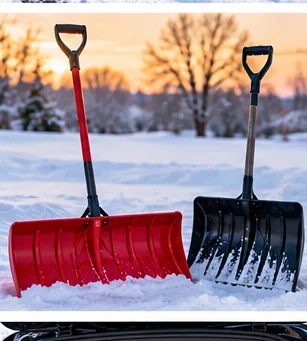
Products and configurations to compare
30–36 inch snow pusher
Moves volume without lifting.
Best when: wide smooth driveway and shallow snow
Watch for: too wide for heavy wet snow
18–22 inch combination shovel
The all-around backup.
Best when: stairs/wet snow/plow berm cleanup
Watch for: more lifting than pusher
Metal-edge ice scraper shovel
Better scraping edge.
Best when: pavement gets compacted tracks
Watch for: can scratch decks/pavers
Blade volume determines lifting load
A huge blade full of wet snow can be brutal.
Pushing preserves energy
Use body weight rather than repeated lifting.
Narrower is better for dense snow
Smaller loads are safer and faster overall.
Surface matters
Poly edges are kinder to decks and decorative surfaces.
Handle geometry matters
D-grips and ergonomic shafts reduce awkward wrist/back positions.
Good manual tools are faster for small jobs
A blower is overkill for two steps, a narrow deck or a two-inch dusting. A pusher, combo shovel, ice scraper and compact electric shovel cover the small jobs that make up much of winter. Handle length and blade geometry matter because poor ergonomics turn a cheap tool into a back problem.
Push snow when possible instead of lifting it. When lifting is unavoidable, move smaller loads and keep the shovel close to the body. Heavy wet snow is dramatically denser than powder, so the same blade volume can become much harder to move after a temperature change.
Match edge material to the surface
Metal edges scrape packed snow well on durable pavement but can catch pavers, wood decks or uneven surfaces. Poly blades glide better and are less likely to scratch. Some pushers use replaceable wear strips, which is more valuable than a flashy handle if the tool sees daily commercial-style use.
Before checkout
- Tool matches typical snow depth and whether snow is wet or powdery
- Driveway/sidewalk surface is compatible with scraper or blade material
- Battery platform and cold-weather charging/storage are understood
- Replacement wear parts or shear pins are available
- Roof tools can be used safely from the ground
- Deicer chemistry is compatible with pavement, pets and landscaping
- Traction cleats fit the exact footwear securely
- Heated gear fits without reducing circulation
- Vehicle kit remains accessible under luggage
- Storage plan allows wet equipment to dry before covering
Buy before the forecast, not during it
Snow equipment is unusual because regional demand spikes at exactly the same moment. The week a major storm appears in the forecast is when shovel racks empty, ice melt gets rationed, replacement shear pins disappear and the most popular blower models sell out. Preseason buying is not only convenient; it lets you choose the right product instead of whatever remains on the shelf.
Use a short inventory at the start of autumn: primary clearing tool, manual backup, ice control, personal traction, vehicle visibility/emergency gear and one storage location. Replace worn scraper edges and dead batteries before they become storm-day failures.
Test the system once before snow
Start the blower or install its charged batteries, unfold the roof rake, fit the cleats over the boots you will actually wear, test the spreader gate and open the car emergency bin. Practice tire chains if your travel requires them. The first time to discover a missing pin, dead charger or wrong cleat size is not at 5 a.m. in a storm.
After each event, dry gear before storage and restock consumables. Winter readiness is less about owning the most equipment than making sure the small set you rely on is ready every time.
Frequently asked questions
Which is better for 2 inches?
A pusher on smooth pavement.
Wet snow?
A narrower combo/lift shovel.
Do metal edges scratch?
They can on sensitive surfaces.
One shovel only?
Choose a medium-width combination shovel.
Affiliate disclosure: SnowSupplies.co may earn from qualifying purchases through Amazon Associates and eBay Partner Network at no extra cost to you. Amazon links use scouttheory-20; eBay links use campaign 5339137014.