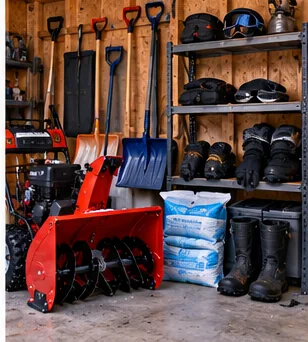
A winter gear station is a spot by the door you actually use where boots dry, gloves wait, cleats hang and the scraper and ice-melt scoop are in reach. Build it before the first storm by choosing one door, three zones (wet, grab and out) and a short list of gear that lives there.
Pick the door
Choose the door you go through in a storm, usually the garage entry, back door or mudroom. A station by a door you never use just becomes a pile. If the house has no good entry, a corner of the garage near the house door works, provided the floor stays out of puddles.
Measure the wall and floor before buying. A tray that does not fit under a bench or a rack that does not fit between door and wall is the common mistake.
Three zones
Zone 1: Wet
A waterproof tray or mat catches boot melt. Hooks hold wet coats and outer layers off the floor so they dry faster. Put wet gloves on a rack or over a vent-free spot, away from heat that could damage them, and follow the care label on gloves and boots.
Zone 2: Grab
A basket or bin holds dry hats, spare gloves and hand warmers. Hang traction cleats on a hook beside the boots they fit, and take them off before stepping onto indoor flooring. Keep a headlamp and a small flashlight here for dark mornings. See the cleat comparison for coil versus spike, and warmers for the pocket kit.
Zone 3: Out
A lidded bucket with a scoop holds a working supply of ice melt. Bulk bags stay in the garage or shed, sealed and dry. Read ice melt safety and storage before filling, keep the lid on, and keep it out of reach of children and pets. A scraper and a small broom for the doorstep go here too.
What lives at the door, and what does not
| Keep at the door | Keep elsewhere |
|---|---|
| Boot tray, hooks, glove bin | Gasoline and fuel containers (a ventilated shed or garage, per the manual) |
| Cleats, scoop, lidded ice-melt bucket | Bulk ice melt bags (sealed, in the garage) |
| Scraper, small broom, headlamp | Powered equipment and batteries (see the maker's storage guidance) |
| Spare hats and gloves, hand warmers | Anything that has to dry in the open |
If you run a snow blower, the machine and its fuel live elsewhere; the cover and storage post covers them. The station holds hand gear only. Powered equipment must be off and stopped before anyone touches the auger or chute, and that happens in the garage, not at the door.
Small spaces and shared entries
If the entry is tiny, shrink the system rather than skip it. A single over-the-door hook strip, one tray and one bin fit a narrow apartment hallway. For a shared entry, give each person a hook and a labeled bin so wet gloves do not land in a heap, and put the ice-melt bucket on the highest shelf that is still easy to reach. A mat that extends past the door catches the first wave of melt before it reaches the floor.
Stock it from a short list
Do not buy a station worth of gear because it looks good on a shelf. Walk the list and replace what is worn. Our short list of worthwhile gear and complete home snow kit help you sort essentials from extras. Buying before the forecast is cheaper and less stressful, as the buy before the forecast post explains.
- Boots tray or mat sized to the door
- Hooks or a rack for outer layers
- Glove and hat bin
- Cleats matched to your boots
- Ice-melt bucket with a lid and a scoop
- Scraper and a small broom
- Headlamp and spare batteries
- Hand warmers
The dry run
Before the first storm, dress as if for shoveling and see where you reach. Try the cleats over the boots you wear, scoop from the bucket with gloves on and hang a wet coat. Fix what is awkward now.
The same station can hold items for a power cut: a lantern and a headlamp. Our outage shopping checklist lists what to add. If you are choosing presents for someone building one, see the gifts for people who shovel and the stocking stuffer guide.
Where to shop
These are search links for categories. Measure the door area first, and check each listing's return terms.
Boot tray or mat
Catches melt and keeps floors drier.
Best when: the entry is tiled, wood or carpeted
Watch for: size to the space; rubber or tray lip depth varies
Wall hooks or entryway rack
Gets coats and gloves off the floor.
Best when: the wall space is free
Watch for: check the weight rating and the wall type
Lidded bucket for ice melt
A working supply with a scoop, kept sealed.
Best when: you spread by hand
Watch for: keep it away from children and pets
Frequently asked questions
Where should a winter gear station go?
By the door you use in a storm, usually the garage entry or back door. Pick the door you actually use and measure the space first.
What should be in a winter gear station?
A boot tray, hooks, a glove and hat bin, cleats, a scraper and a lidded ice-melt bucket with a scoop. Keep fuel and powered equipment elsewhere.
Can I keep ice melt inside the house?
A small working supply in a lidded bucket is common, but keep it sealed and away from children and pets. Bulk bags stay dry in a garage or shed.
Where do traction cleats belong?
On a hook beside the boots they fit, and take them off before stepping on indoor floors.
How do I test my station before winter?
Dress for shoveling and try the cleats, the scoop and the hooks with gloves on. Fix what is awkward before snow arrives.
Affiliate disclosure: SnowSupplies.co may earn from qualifying purchases through Amazon Associates and eBay Partner Network at no extra cost to you. Amazon links use scouttheory-20; eBay links use campaign 5339137014.