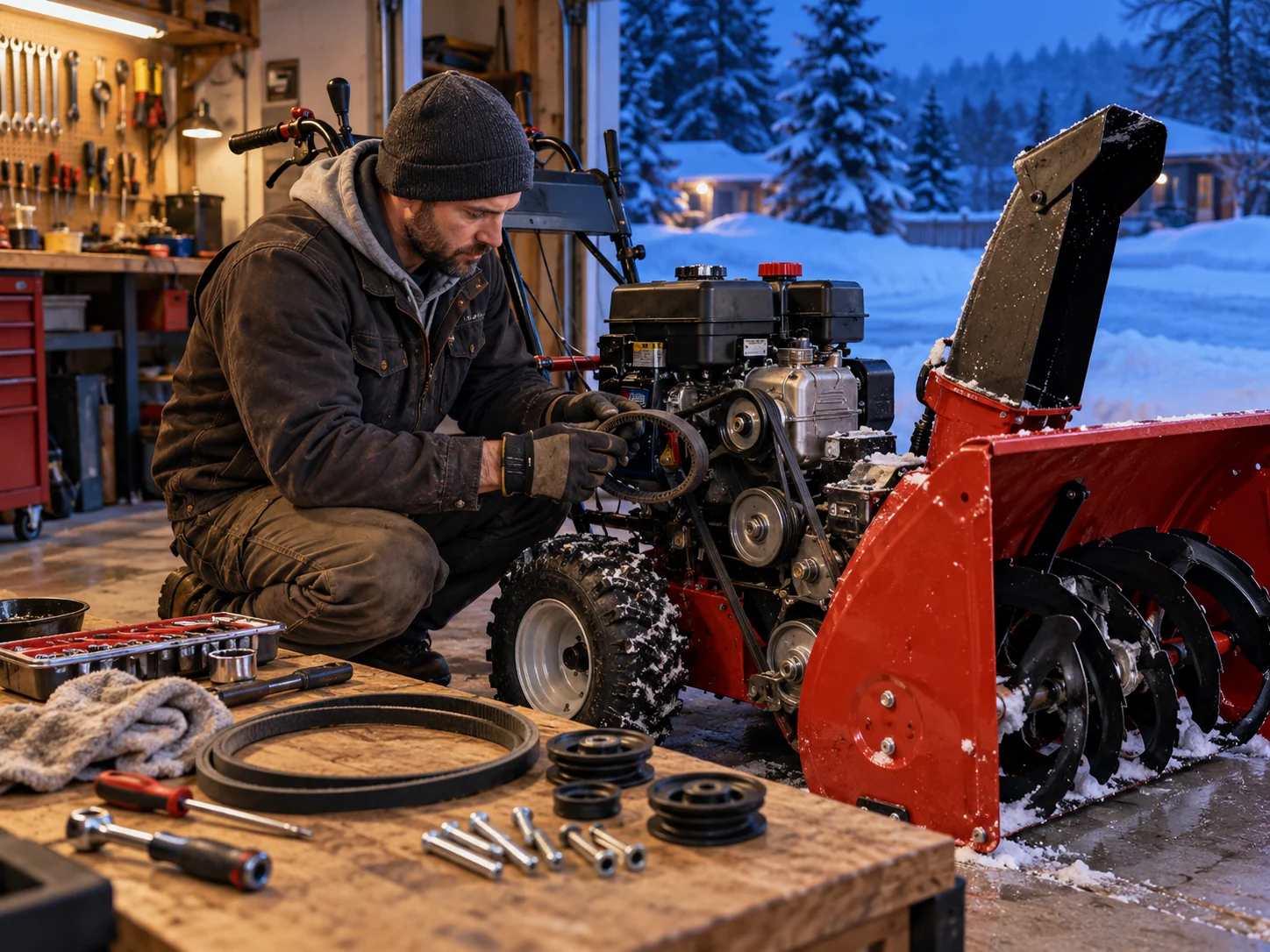
Before the first storm, a gas snow blower needs fresh gasoline at or below the ethanol limit in its manual, a stabilizer if the fuel will sit, a gas-approved container and the engine oil your manual specifies. Honda, Briggs & Stratton and Troy-Bilt all recommend limiting ethanol and not trusting old fuel, but the exact oil grade and any stabilizer dose come from your machine's manual and the product package.
The fuel: ethanol limit and freshness
Honda's snow blower fuel page says not to use gasoline containing more than 10 percent ethanol, explaining that higher ethanol is corrosive and attracts water. Briggs & Stratton's stabilizer guidance says to avoid ethanol and flex fuels in its engines, especially E15, and to use fresh gasoline with at least 87 octane. Troy-Bilt recommends E10 or lower. If your manual gives a different limit or octane rating, follow your manual.
The pump label states the ethanol percentage, so read the sticker before you fill. Buy fuel for the season in a small quantity rather than a big drum you will carry into spring.
On freshness, the brands give different numbers: Briggs & Stratton says untreated gas can start to degrade in as little as 30 days, Troy-Bilt says add stabilizer if the machine will sit unused for 30 days or more, and Honda suggests stabilizer if the container will take more than three months to use. Treat these as a warning that fuel from last winter is not fuel for this winter.
Stabilizer: what it does and does not do
Fuel stabilizer slows degradation in fuel that will sit. Briggs & Stratton says to add it according to package directions and then run the engine for a few minutes so treated fuel reaches the carburetor. Honda notes that stabilizers will not reconstitute stale fuel, so adding it to old gas does not rescue it.
Honda suggests filling the tank after use rather than before, because a partly filled tank gives air more room to break fuel down, and Briggs & Stratton advises keeping the tank full with stabilizer in storage. Honda also advises draining the fuel system for off-season storage following the owner's manual, so brands differ. Pick your manual's method. See carburetor storage and winter storage for the end-of-season side.
The container
Honda says to store fuel in a clean, sealed plastic container approved for gasoline, away from direct sunlight. A container that is rated for gasoline, fits your hand and has a spout that works matters more than capacity. Label it with the date you filled it so you know when it is stale. Keep it outside living space, away from heaters and pilot lights.
The oil
Four-cycle snow blower engines have an oil sump that needs checking and changing. Troy-Bilt says its newer four-cycle snow blowers run on gasoline alone but the oil needs changing at least once a season. A two-cycle engine is different: Troy-Bilt says you need to mix gasoline and oil and that the ratio is in the operator's manual.
None of the sources we read gave a universal oil grade, and we do not either. Cold-weather viscosity, oil capacity and change intervals are in your owner's manual or on the engine's maker site. Check the dipstick with the machine on level ground and the engine off, and buy a little more than the sump holds so you are not shopping mid-season.
Label versus manual: what to check where
| Item | On the label or package | In your manual |
|---|---|---|
| Gasoline | Ethanol percentage on the pump, octane number | Maximum ethanol, minimum octane |
| Stabilizer | Dose and how long it protects | Whether and when to use it |
| Engine oil | Viscosity grade and spec on the bottle | Which grade, how much, change interval |
| Two-cycle mix | Mix instructions on the oil bottle | Required fuel-to-oil ratio |
| Fuel container | Rating for gasoline | Where to store it |
If you are also stocking spares, the spare parts kit and pre-season service pages cover plugs, belts and shear pins. A cover is in the cover and storage post, and a good cold-start habit is in the cold-start video.
Shopping checklist
- Read the manual's fuel and oil pages first
- Gas-approved container, clean and dated
- Fresh gasoline at or under the ethanol limit
- Stabilizer if fuel will sit
- Oil in the grade the manual names
- Funnel or spout that fits the tank
- Spark plug and shear pins matched to the model
- A place to keep fuel out of living space
Looking for gifts for the owner instead? See gifts for someone with a snow blower.
Where to shop
These are search links. Take the model number and the oil and fuel specs from your manual and read each product's label.
Gas-approved fuel container
A clean container rated for gasoline.
Best when: you buy fuel in small amounts for the season
Watch for: check the rating label and spout design
Fuel stabilizer for small engines
For fuel that will sit unused.
Best when: your machine sits between storms
Watch for: follow package dosing; it will not fix stale fuel
Engine oil in your manual's grade
Four-cycle oil in the grade your manual names.
Best when: your engine is four-cycle
Watch for: match the viscosity in the manual, not a guess
Frequently asked questions
What fuel should I use in a gas snow blower?
Fresh gasoline within the ethanol limit in your manual. Honda says no more than 10 percent ethanol, and Briggs & Stratton advises avoiding E15.
Do I need fuel stabilizer?
If the fuel will sit, manufacturers suggest it. Add it per its package and run the engine briefly so treated fuel circulates. It does not revive stale fuel.
What oil does my snow blower use?
Your owner's manual names the grade, amount and change interval. The sources we read gave no universal grade.
Should I change the oil before the first storm?
Troy-Bilt says four-cycle oil should be changed at least once a season. Follow your manual for interval and procedure.
Does this apply to battery snow blowers?
No. Battery and corded electric machines have no fuel or engine oil; check the manual for battery storage guidance.
Affiliate disclosure: SnowSupplies.co may earn from qualifying purchases through Amazon Associates and eBay Partner Network at no extra cost to you. Amazon links use scouttheory-20; eBay links use campaign 5339137014.