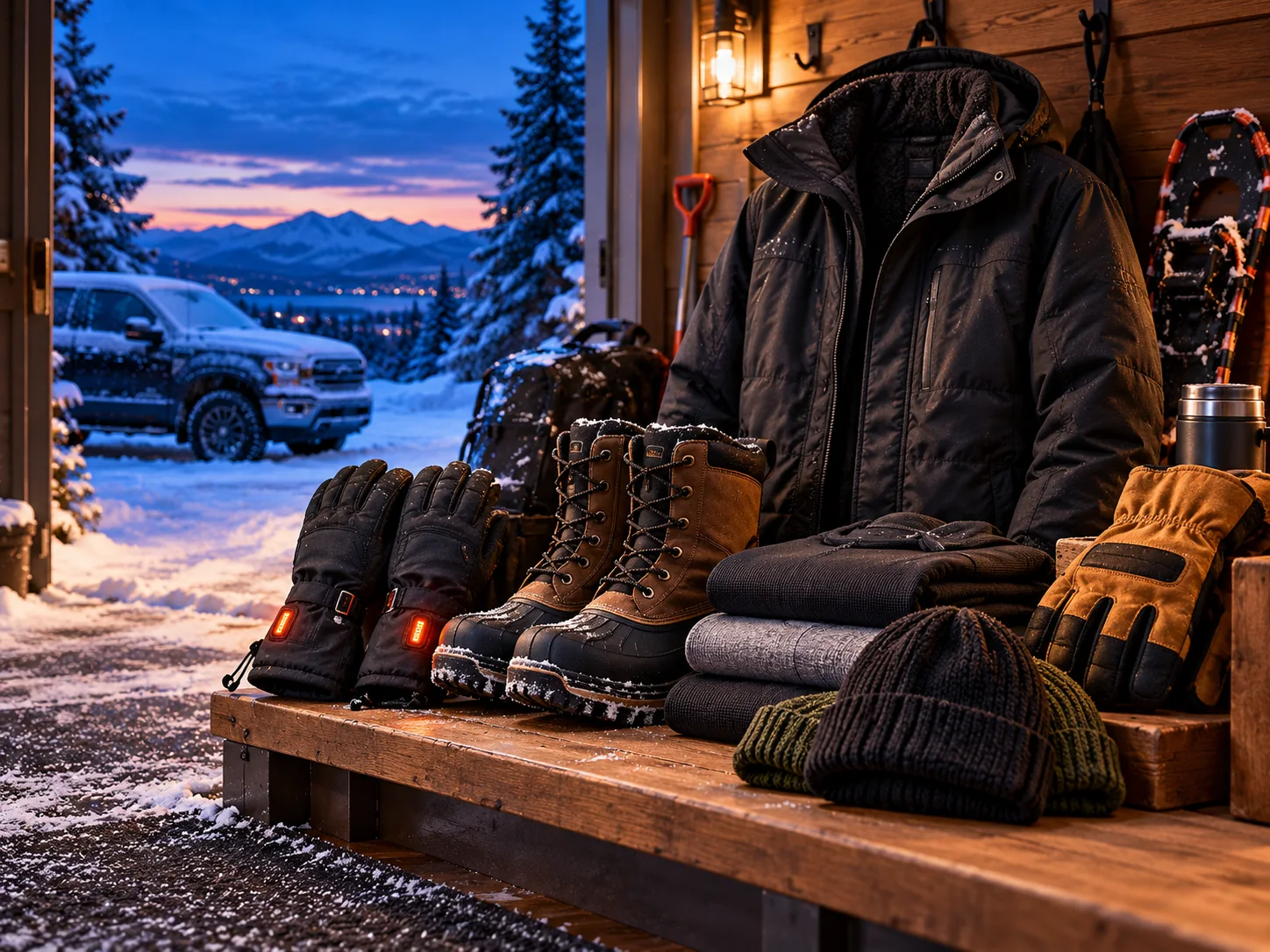
For snow removal, pick boots by four checks: a deep, widely spaced tread on a sole that stays flexible in the cold, a waterproof construction that reaches above the ankle, insulation sized to how much you move, and a fit with room for a warm sock and a cleat if you plan to wear one. A boot that fails any of these is the one you will regret at 6 a.m. in a storm.
Start with the sole
Snow removal means walking on packed snow, wet pavement, salted slush and the occasional glaze of ice, often while carrying or pushing something. The sole decides how safe that is. Look for deep, angular lugs spaced far enough apart that snow does not pack in and turn the sole into a slick, and a rubber compound the maker describes as flexible in cold weather. Hard plastic soles can stiffen and slip.
Smooth-looking soles and shallow tread are for dry pavement. If the listing does not show the sole, ask the seller for a photo of the bottom. For a deeper look at slip risk on walkways, see the site's slip and fall prevention page.
Waterproofing and shaft height
Snow melts around your ankles the moment you step into a drift, so the boot needs to keep water out above that line. Look for a described waterproof membrane or sealed construction, taped seams and a gusseted tongue, and a shaft that rises well above the ankle bone. A rubber lower section with a fabric upper is a common design, and it is easier to rinse salt off than suede or untreated leather.
A taller shaft keeps snow out but is harder to put on in a hurry. A gaiter or pant leg over the cuff can add some protection. Waterproof does not mean unlimited: a boot filled over the top will still get wet, and a soaked sock is cold no matter how good the boot is.
Insulation sized to your effort
Shoveling warms you up; standing at the end of a driveway does not. Choose insulation for the job you actually do. A boot that feels perfect on a long walk can overheat during a hard shovel session, and sweat is a common cause of cold feet. If the listing gives a temperature rating, treat it as the maker's claim and not a promise, since individual circulation varies.
Socks matter as much as the boot. Wool or synthetic socks that wick moisture are generally better than cotton, which holds sweat. Do not cram thick socks into a boot that fits snugly in a thin pair, because a boot that is too tight cuts circulation and gets colder, not warmer.
Fit checks that matter in the cold
- Heel stays down when you walk; lifting means blisters and slips
- Toes can wiggle with your winter sock on
- Try on in the evening or after activity, when feet are slightly bigger
- Check the pull loop, laces and any buckle: gloves on, can you operate them?
- Look at the weight; heavier boots tire you out over a long clearing session
- Walk a flight of stairs and a slope if you can; heel lift shows up quickly
- Check the footbed; removable ones dry faster and can be swapped
If you are between sizes, a half size up with a thicker sock usually beats a half size down. Follow the maker's sizing chart, and read the seller's return policy before you wear a pair outdoors.
Will ice cleats fit?
Slip-on traction aids can turn an ordinary boot into an ice-capable one, but they have limits. Some rely on a stretch frame that needs a firm sole and a certain toe shape; others strap on. Check the cleat maker's sizing against your boot size and sole type before you buy, and confirm that the boot sole is stiff enough to hold the frame. Remove cleats before stepping on tile, hardwood or a metal ramp, where they can slip, and before climbing into a vehicle. Put them on at the door, before you step onto the ice, not once you are already sliding.
The site compares two styles in Yaktrax Pro vs Korkers ice cleats. For the gear you keep by the entry, read the winter gear station guide, and for your hands, gloves vs mittens for shoveling.
Care between storms
Wet boots left in a heap stay cold the next morning. Pull the footbed, loosen the laces and let the boots dry at room temperature, not on a radiator or against a heater, where heat can damage glue and rubber. Rinse off salt and slush; salt residue is hard on many materials. Keep a second pair of socks near the door, because dry socks are the cheapest upgrade, and a boot tray catches the melt so the next pair starts dry.
When you run a snow blower, wear boots that grip and stay clear of the chute and discharge. Shut the machine off and let it stop completely before reaching toward the auger.
Where to shop
These are category searches. Read the sole description, waterproofing and sizing notes in each listing, and check the return terms before you wear a pair outdoors.
Waterproof insulated winter boots
A tall, waterproof boot with lugged rubber for general snow clearing.
Best when: you shovel or snow blow regularly
Watch for: read the sole photo and sizing chart; check shaft height
Slip-on ice cleats for boots
Traction aids that stretch or strap over a boot for glazed walks.
Best when: your walks and steps ice over
Watch for: match the size chart; remove indoors and on hard flooring
Wool or synthetic winter socks
Moisture-wicking socks to wear with insulated boots.
Best when: your feet sweat during long clearing sessions
Watch for: avoid cotton; make sure the boot still fits with the sock
Frequently asked questions
What should I look for in boots for shoveling snow?
Look for a deep, widely spaced tread, a waterproof construction that rises above the ankle, insulation that fits your effort level, and a fit with room for a warm sock.
Are insulated boots too hot for shoveling?
They can be. Hard work warms you up, and sweat inside a boot makes feet cold. Choose insulation for the activity and wear moisture-wicking socks.
Can I wear ice cleats over any winter boot?
Not always. Check the cleat maker's sizing and sole requirements, and make sure your boot sole is stiff enough to hold the frame.
Should winter boots be a size larger?
A half size up with a winter sock is often better than a half size down, but follow the maker's sizing chart. Boots that squeeze your toes get colder.
How do I dry winter boots?
Remove the footbed, loosen the laces and dry at room temperature. Avoid direct heat, which can damage glue and rubber.
Affiliate disclosure: SnowSupplies.co may earn from qualifying purchases through Amazon Associates and eBay Partner Network at no extra cost to you. Amazon links use scouttheory-20; eBay links use campaign 5339137014.